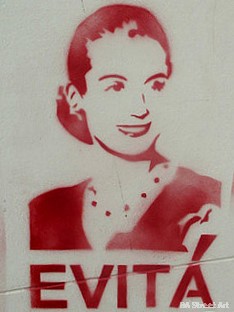

Boca Juniors is one of the biggest football clubs in world and street art featuring its players can be found all over the neighbourhood of La Boca in Buenos Aires. Photos by Buenos Aires Street Art.
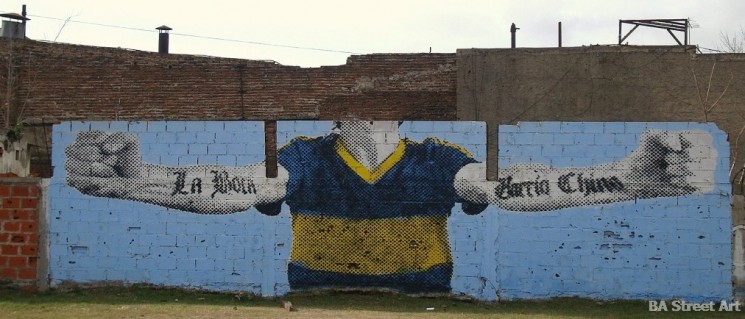
Stencil featuring Boca Juniors in La Boca (photo © BA Street Art)
The ‘barrio’ of La Boca is Buenos Aires’ most colourful neighbourhood famous for its painted houses and the tourist spot of El Caminito. La Boca means ‘mouth’ in Spanish and the district was named after the estuary of the Riachuelo river that flows into the Rio de La Plata that separates Argentina with Uruguay.
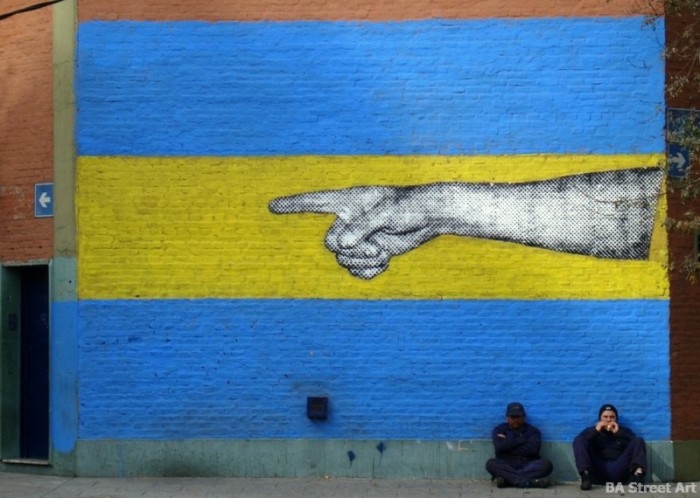
Boca Juniors flag and stencil (photo © BA Street Art)
La Boca has been described as ‘The Bronx’ of Buenos Aires but that nickname is perhaps unfair. It’s a working class neighbourhood with some rough areas. Many artworks can be found around La Bombonera. However, if you are visiting Buenos Aires as a tourist, the police don’t advise straying too far from El Caminito. (There have been a couple of serious incidents in the past e.g. when a tourist was stabbed 10 times on the corner of Olavarria y Garibaldi in Dec 2017; and a Canadian tourist on a bike tour was held up at gunpoint by a motorbike thief on the corner of Irala y Espinosa in Sept 2014.

Stencil in La Boca by Run Dont Walk (photo © BA Street Art)
Stencils by Run Dont Walk are among the many examples of street art around Buenos Aires depicting the blue and yellow colours of Boca Juniors.

Mural by artist Orilo (photo © BA Street Art)
Match days in La Boca see houses with flags draping from balconies and locals all wearing Boca Juniors football shirts.
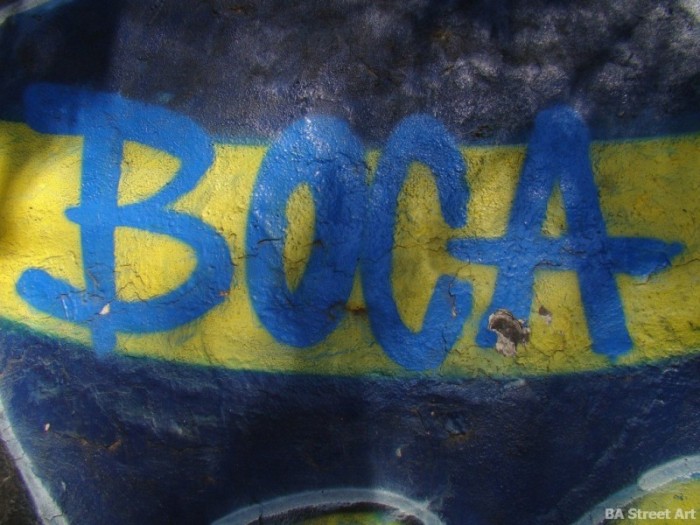
Boca Juniors colours (photo © BA Street Art)
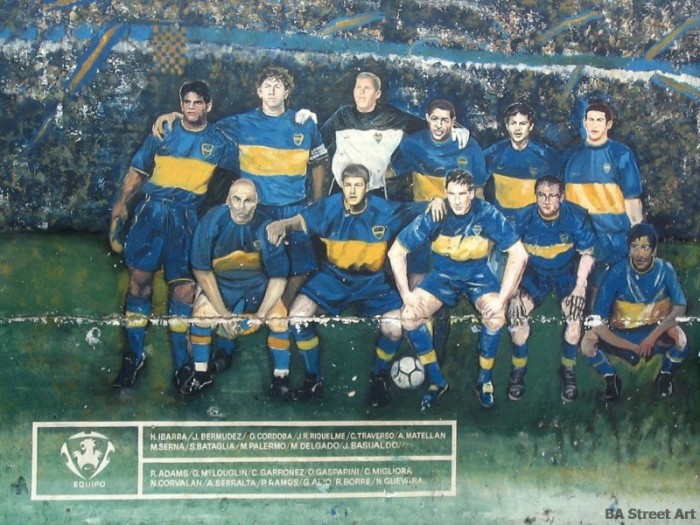
Boca Juniors team featuring Riquelme, Palermo and Tevez (photo © BA Street Art)
Boca’s legendary 2000 team that beat Real Madrid 2-1 in Intercontinental Cup Final in featured in a mural in the square at the end of El Caminito.

Stencil art featuring Boca Juniors players (photo © BA Street Art)
Boca’s colours derive from those of the Swedish flag. According to legend, in 1906 Boca played another team that wore a pink strip to decide who would get to keep it. Boca lost, and decided to adopt the colours of the flag of the first boat to sail into the port at La Boca. This proved to be the freighter “Drottning Sophia”, a Swedish vessel sailing from Copenhagen.
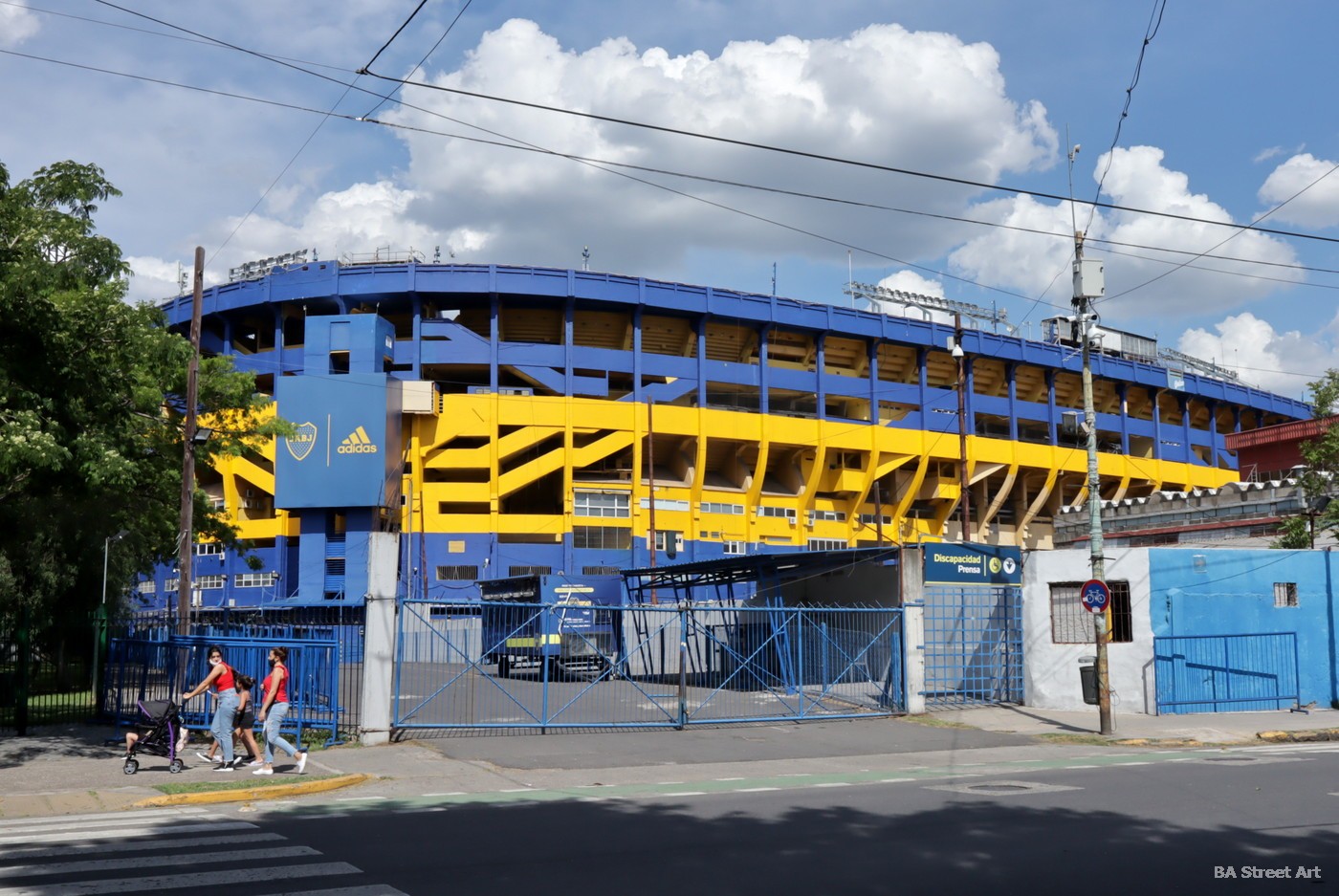
La Bombonera Boca Juniors’ stadium (photo © BA Street Art)
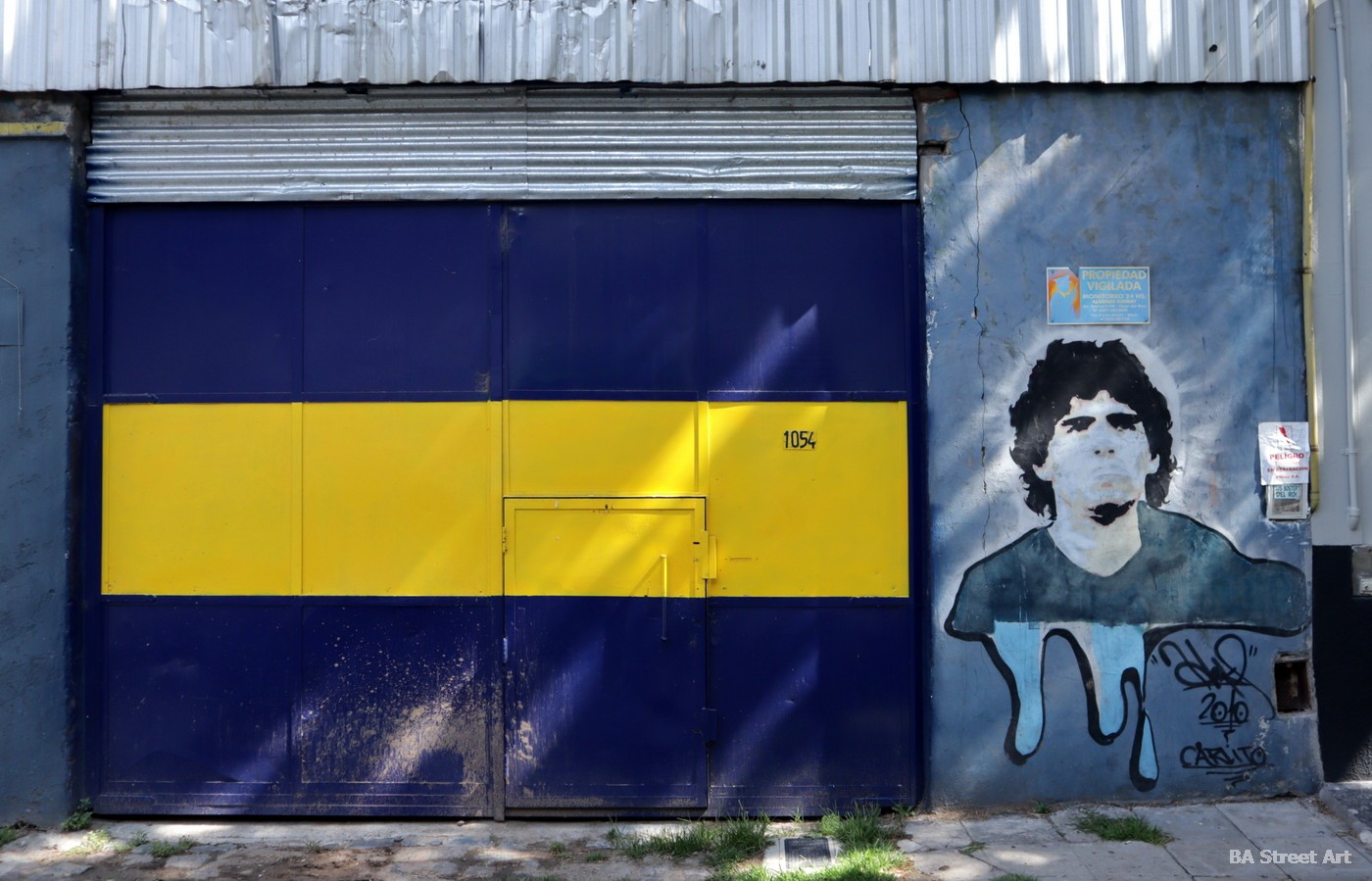
Garage painted in Boca Juniors colours (photo © BA Street Art)
Many, houses, walls, garages and even lamp posts around the neighbourhood are also painted with murals in the famous colours.

True colours – mural on the outside of La Bombonera (photo © BA Street Art)
Many famous footballers have played for Boca including of course Diego Maradona who sported a bizarre haircut in the team’s colours during his second spell with the club. More recently Juan Roman Riquelme, Claudio Caniggia, Gabriel Batistuta, Sebastián Battaglia and Carlos Tévez are other Boca legends – many of whom have had tribute to them painted on walls.
Diego Maradona
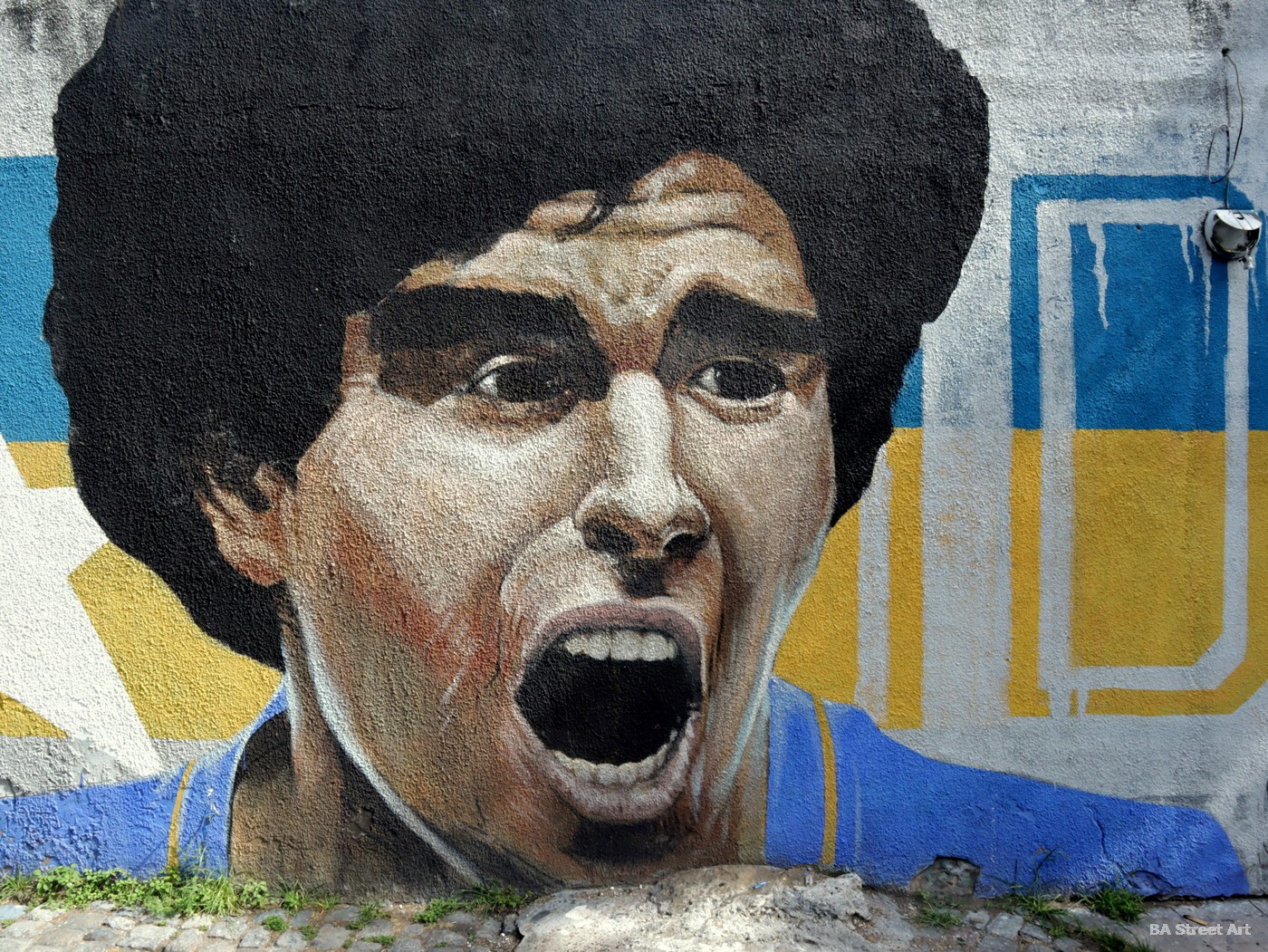
Diego Maradona mural in La Boca (photo © BA Street Art)
Please check out a separate blog post on the best Maradona murals in Buenos Aires
Juan Roman Riquelme
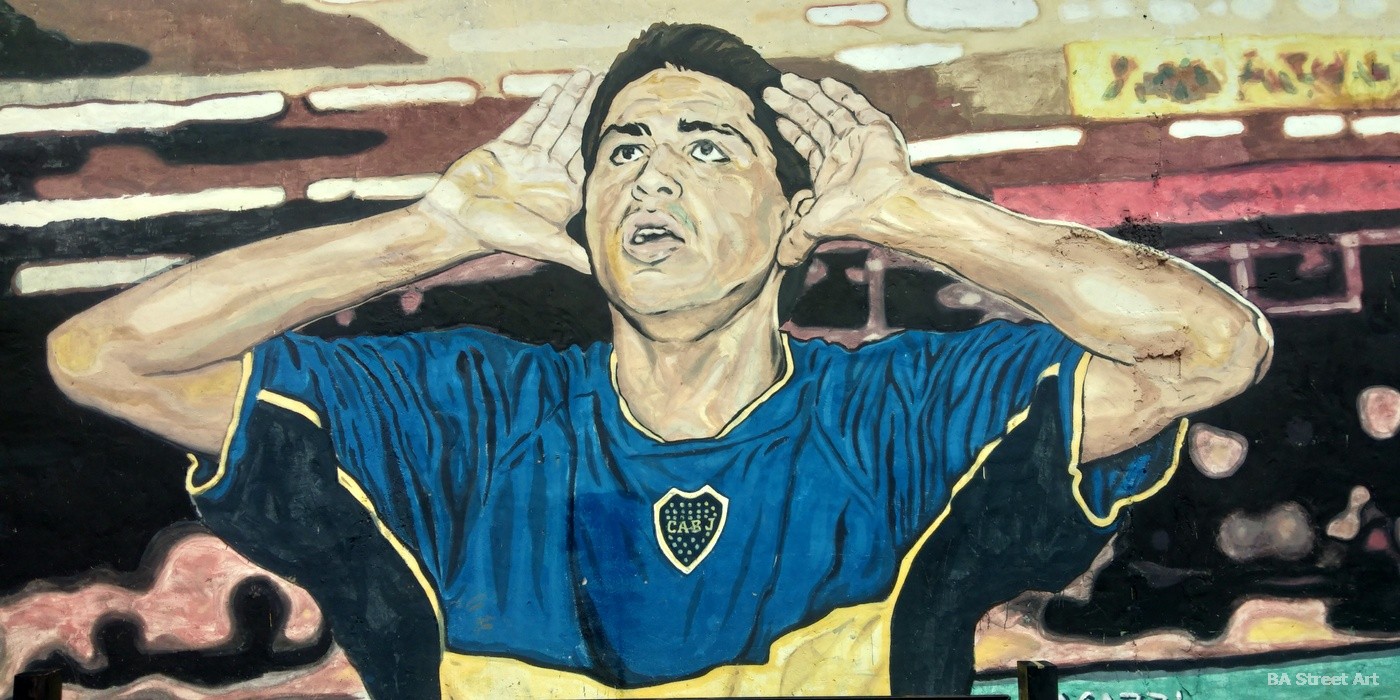
Juan Roman Riquelme (photo © BA Street Art)
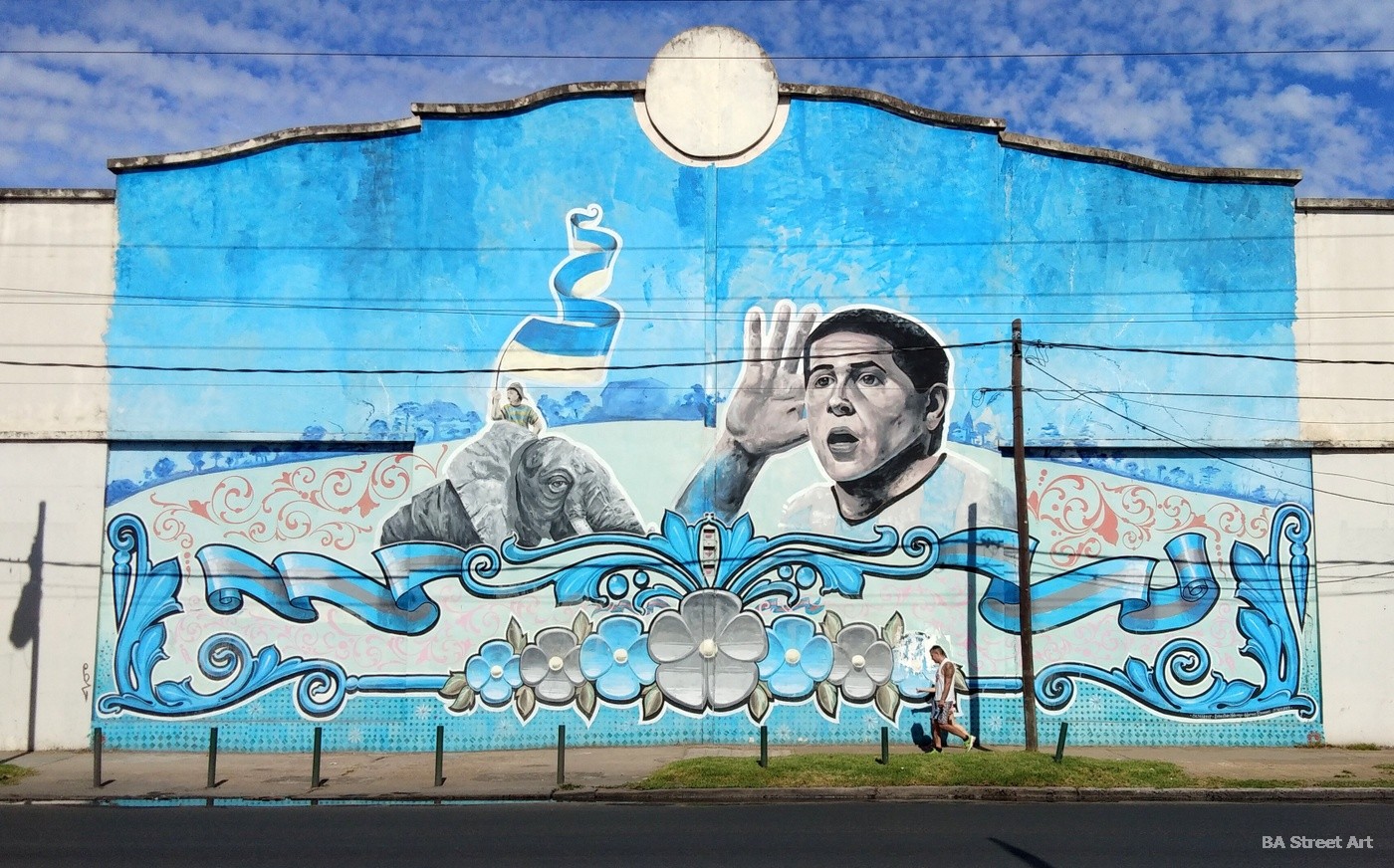
Tribute to Riquelme in Don Turcuato, Buenos Aires, where he grew up (photo © BA Street Art)
Carlos Tévez

Huge mural of Carlos Tévez in La Boca by Martin Ron (photo © BA Street Art)
Tévez joined Boca Juniors aged 16 and spent three years at the club before moving to Brazilian club Corinthians for 15 million euros. It was the most expensive transfer in South American football at the time. After spells at European clubs such as West Ham United, Manchester United, Manchester City, Juventus and also Shanghai Donghai, Tévez returned to the club in 2015.
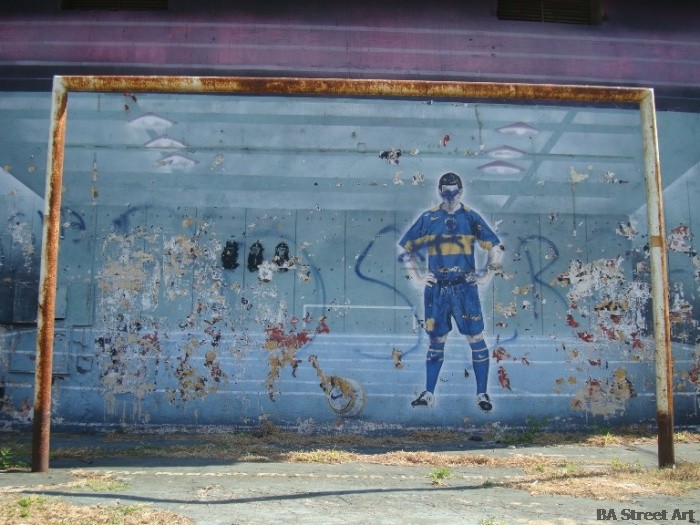
Tévez in Boca colours (photo © BA Street Art)
Martin Palermo

Martin Palermo – traditional mural of the famous Boca Juniors striker in La Boca (photo © BA Street Art)
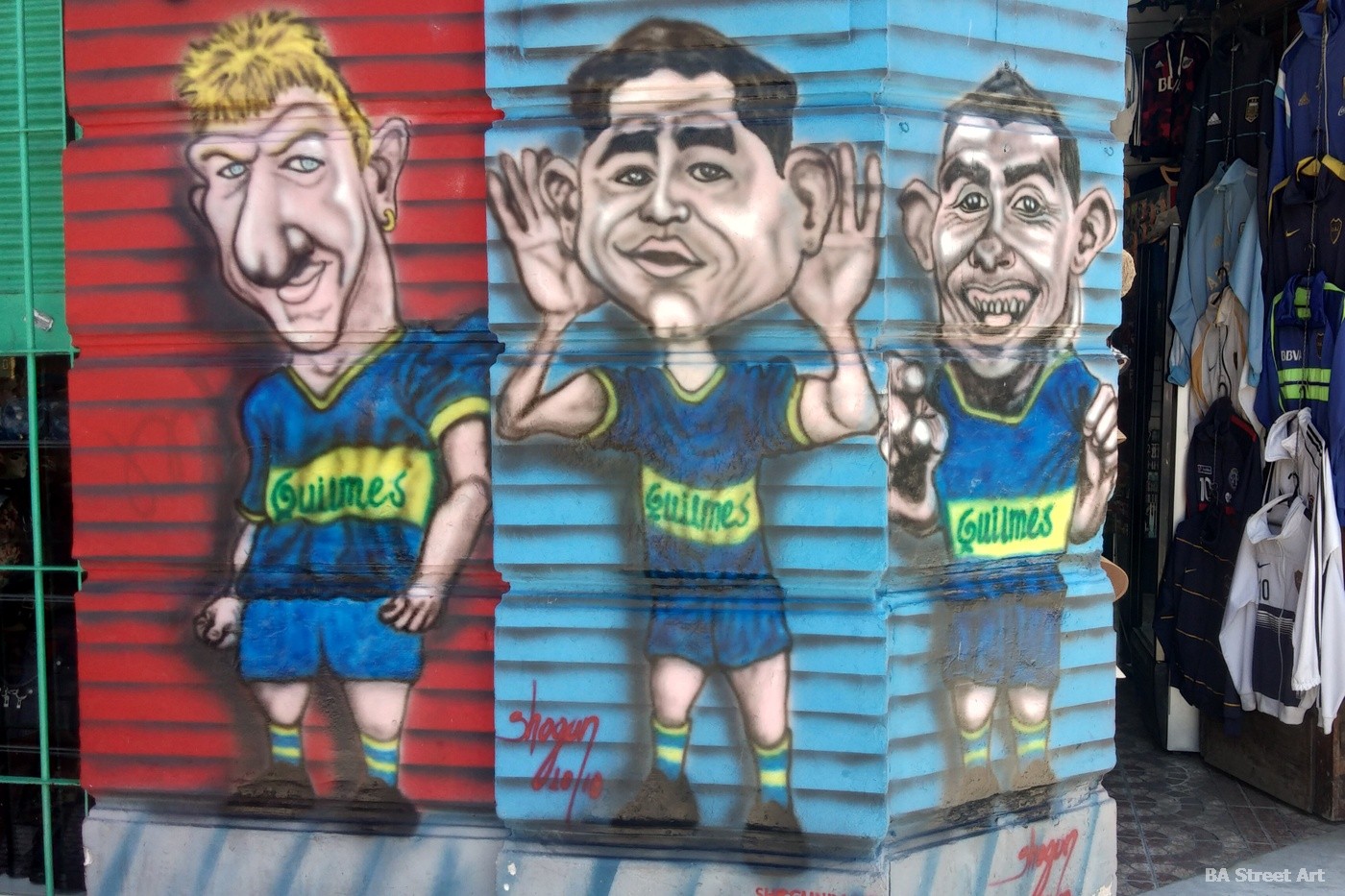
Martin Palermo (left) with Riquelme & Tévez
Guille Barros Schelotto
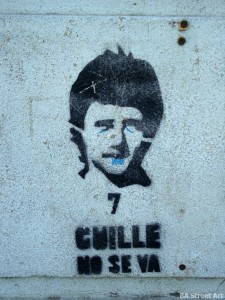
Stencil saying: “Guille don’t go” (photo © BA Street Art)
Guille Barros Schelotto was one of Boca Junior’s most popular players. The forward was at the club for 10 years before signing a contract with Major League Soccer club Columbus Crew in 1997.
El Doce

Cartoon graffiti paying tribute to “El 12” by Nikov
Boca Juniors’ hardcore fans are known as “el 12” or the 12th man. A number of football clubs in Argentina have a group known as the “barra brava” the equivalent of hardcore fans and hooligans. Members of “el 12” have been banned from stadia and have criminal records for illegal ticket sales, mafia dealings, violent crime & even killing people.

Mural featuring Boca Juniors fans by Gordo Pelota (photo © BA Street Art)
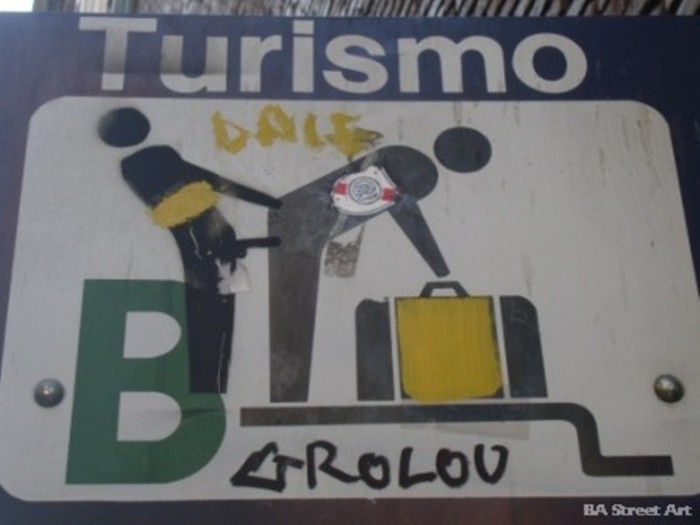
Altered tourism sign (photo © BA Street Art)
River Plate are Boca Juniors’ arch rivals and it’s common to see writing or slogans written by fans mocking their adversaries. This road sign takes the mickey out of River, or as the Boca fans would say: “Boca le rompe el orto a River”.
All photos © Buenos Aires Street Art
(This article was updated in November 2020)